Employee Handbook Management
Mitratech Smart Employee Handbook Plus
A practical look at what a compliant employee handbook requires, whether your business needs one, and how Smart Employee Handbook Plus builds and maintains multi-state handbooks — with automatic alerts the moment a law changes.

What is Mitratech: Smart Employee Handbook Plus
Smart Employee Handbook Plus is Mitratech’s handbook platform, built to assemble compliant, multi-state handbooks in minutes. Also, it keeps them current with automatic alerts when the laws that govern your policies change.
- Automatic alerts when laws change — no manual tracking, built right into the builder.
- Rated by 1M+ employers.
- Multi-state, Spanish, and e-signature support built in.
- Customizable to your policies, not a generic template.
- Builds in minutes, not weeks — and customers save up to 20 hours per week on HR administration.
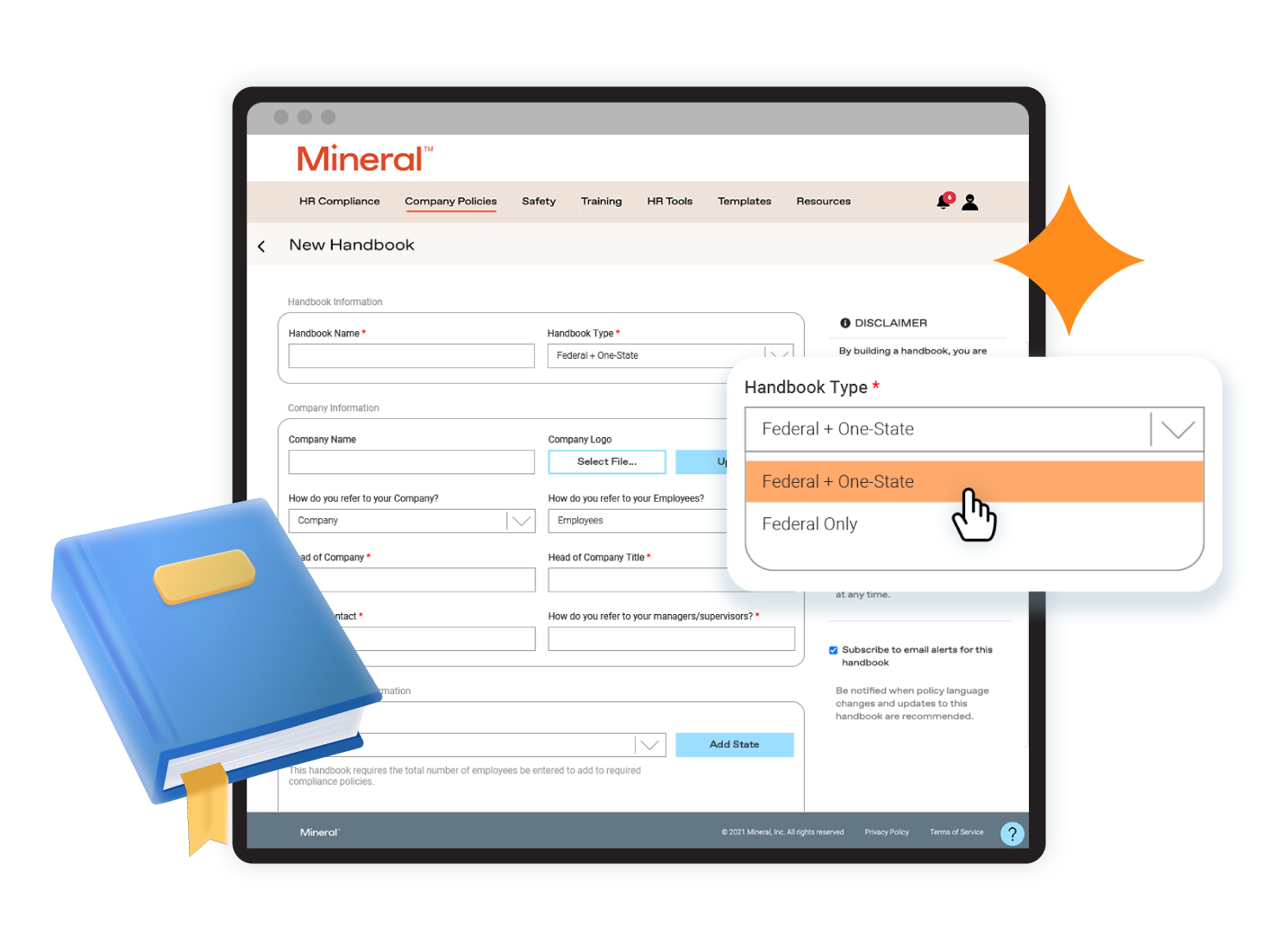
Mitratech Smart Employee Handbook Plus Includes:
|
What it covers |
|
|---|---|
|
Company Policies |
Code of conduct, attendance, dress, technology and communications use |
|
Legal Notices |
At-will status, equal opportunity, anti-harassment, ADA |
|
Pay & Hours |
Timekeeping, overtime, pay periods, meal and rest breaks |
|
Leave & Time Off |
|
|
Safety & Conduct |
|
|
State Addenda |
State-specific policies for each jurisdiction you operate in |
|
Acknowledgment |
Employee signature confirming receipt and review |
Most Challenging Parts of Managing a Handbook
The forces driving the complexity:
-

An outdated handbook is a liability, not a formality. An unenforceable or non-compliant policy can undercut your defense in a dispute.
-
Policies get applied inconsistently across locations. Different managers and practices create uneven risk from the same document.
-
Multi-state means multiple rulebooks. Every state you employ in adds required policies and notices.
-
Every law change is a handbook change. Heading into 2026, expanding pay transparency rules, new harassment-prevention mandates, and evolving leave laws all changed what many handbooks must say.
-
Manual builds are slow and costly. Twenty-plus hours and legal fees for something that starts aging immediately.
-
Gaps surface at the worst time. Handbook problems tend to show up in an audit or a claim.
-
There’s no easy way to prove people received it. Without acknowledgments at scale, “we have a policy” is hard to demonstrate.


How Mitratech Makes Handbooks Easy
of surveyed clients rated the handbook creation tool as better than other solutions they have seen or used
or more annual savings were reported by nearly one-third of clients
of surveyed organizations save 5 hours or more per week in HR or compliance administration with Mineral
Can Your Employee Handbook Keep Up With Changing Employment Laws?
Outdated employee handbooks expose organizations to legal risks, miscommunication, and compliance issues.
Regular updates ensure your policies reflect current laws, company culture, and best practices. An up-to-date handbook sets clear expectations, reduces misunderstandings, and helps protect your organization from potential legal disputes.
Mitratech’s automated policy alerts help keep your handbook up-to-date in real time. When a policy needs review, simply use the side by side text comparison to accept changes in one-click.

Build a Federal and Multi-State Employee Handbook in Minutes
What if you could simply fill out a brief questionnaire and instantly generate a federal- and multi-state-compliant handbook ready for download? Plus, we stay on top of any legal changes for you—whenever regulations shift, we’ll notify you and automatically update the relevant policies in your handbook.
- Generate a Spanish-language version to support your diverse workplace
- Stay current with the latest HR and legal employment policies
- Build federal- and multi-state compliant handbooks
- Manage employee e-signatures
- Receive timely alerts and updates

Ready for a handbook that keeps up?
See how Mitratech helps you create, update, and manage employee handbooks from one place.

“The Smart Employee Handbook builder in the platform is easy to use and manage. The regulations are constantly updated, so I have peace of mind knowing my handbook is accurate.”

"Having [Mitratech] Mineral feels like we have an HR expert in-house to answer our questions and keep our policies and handbooks up-to-date and in compliance."
Most Challenging Parts of Managing a Handbook
Tracking state compliance requirements
Ongoing review and updates
Tracking federal compliance requirements
Stop the Cycle: Modernize Your Employee Handbook Management
Creating and maintaining an effective employee handbook can feel like an endless task. The process of tracking new laws, updating your handbook, and distributing the revised version can be time-consuming and overwhelming. Then, just as you think it’s done, new regulations emerge, and the cycle starts again.
It’s not just about staying compliant—it’s about managing your time and resources more efficiently. Instead of constantly writing, updating, and distributing, streamline the process with a proactive approach to compliance. Let us help you keep your handbook current without the repetitive hassle.

FAQS about Employee Handbooks
How often should I update my employee handbook?
Your organization should update the employee handbook at least once a year, and any time a relevant law changes or your own policies change. For multi-state employers, that effectively means reviewing whenever any state you operate in updates its requirements — which is why automatic alerts matter more than a fixed annual cadence.
What should an employee handbook include?
An employee handbook should include core company policies (conduct, attendance, technology, pay, and leave), required legal notices (at-will status, equal opportunity, anti-harassment, and ADA), safety and complaint procedures, state-specific policies for each jurisdiction you operate in, and an acknowledgment page for employees to sign.
Do I need a different handbook for each state?
Most employers can use one core employee handbook with state-specific policies or addenda for each state where employees work. State and local requirements may differ for paid leave, meal and rest breaks, accommodations, and other workplace policies. Some organizations maintain separate state handbooks when those differences are extensive. Whichever structure you choose, keep each addendum current, provide employees with the policies that apply to their work location, and collect updated acknowledgments when policies materially change.
How long does it take to build an employee handbook?
Done manually, building an employee handbook can take 20+ hours plus legal fees. With software that assembles the right policies and notices for your states, you can reach a solid first draft in minutes and then customize.
Is an employee handbook legally required?
No federal law requires an employee handbook; however, they are strongly recommended, and some states require certain policies to be provided to employees in writing, so most employers should have a handbook and keep it current.
Can employees sign an employee handbook electronically?
Yes. Under the federal ESIGN Act and state UETA laws, electronic signatures are generally valid, so employees can acknowledge a handbook electronically — which also makes receipt far easier to track and prove.
What's the difference between an employee handbook and an HR policy?
An HR policy is a single rule on one topic; the employee handbook is the organized collection of your policies plus required legal notices, distributed and acknowledged by employees. The policy is one page in the book; the handbook is the book.
Disclaimer: This page is general information, not legal advice. For your specific situation, consult qualified employment counsel.

©2026 Mitratech, Inc. All rights reserved.
©2026 Mitratech, Inc. All rights reserved.