指南
How to Choose Enterprise Legal Management Systems (ELM Guide for In-House Teams)
Choosing between enterprise legal management systems is more than comparing feature lists, demos, and vendor promises. For in-house legal teams, it’s a long-term operational decision. One that shapes how Legal delivers visibility, consistency, and control across the business.
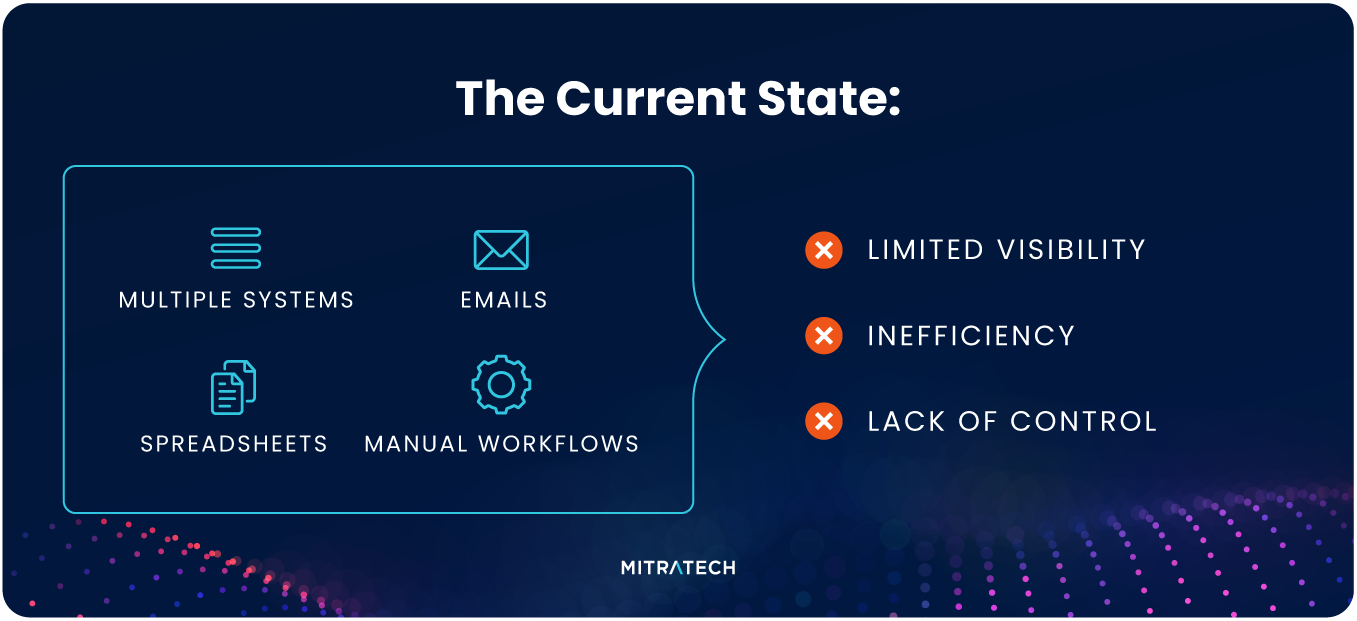
The wrong system doesn’t just fall short on features. It leaves teams working across disconnected tools, manual processes, and fragmented reporting that never quite answers the questions leadership is asking.
As legal departments face growing matter volume, pressure to control outside counsel spend, and rising expectations to report on performance more clearly, enterprise legal management systems play a central role in how legal work is structured, managed, and measured across the business.
According to the Association of Corporate Counsel benchmarking insights, outside counsel spend represents a significant portion of legal department budgets, making visibility and control a top priority for legal operations teams.
When comparing options, the most important question is not which platform has the longest feature list. It is whether the system gives legal a true system of record, supports legal-specific workflows, and fits how your department and business stakeholders actually work.
How Do You Choose Between Enterprise Legal Management Systems?
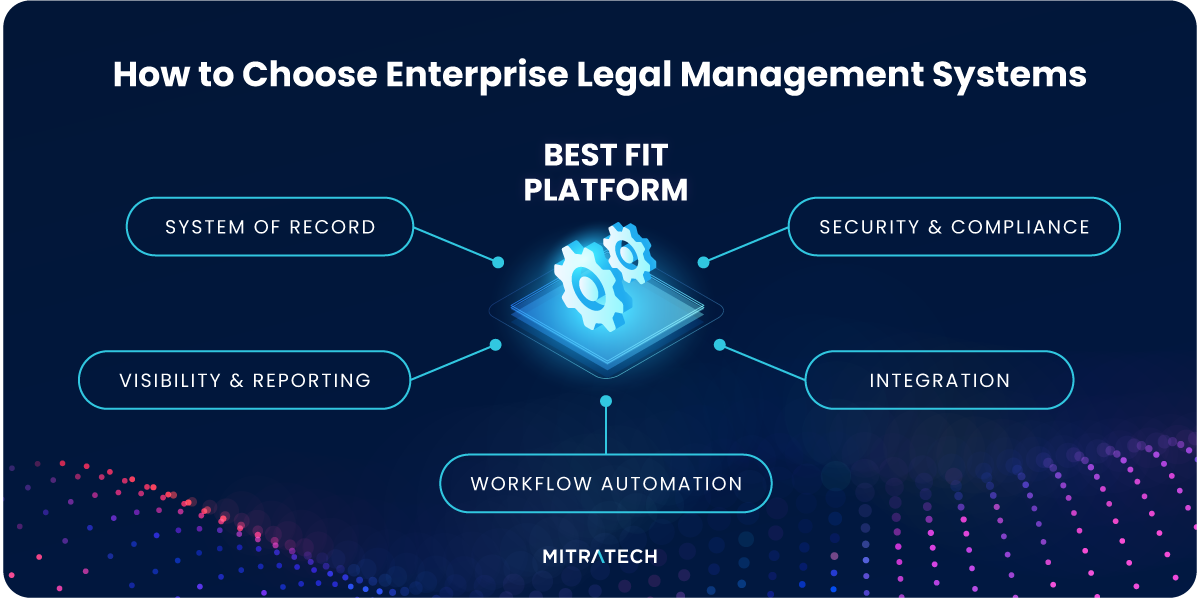
To choose between enterprise legal management systems, evaluate how well each platform:
- Centralizes legal work into a single system of record
- Supports matter management, spend management, intake, triage, and reporting
- Improves visibility into matters, spend, and performance
- Reduces manual effort through automation and standardized processes
- Integrates with enterprise systems and business workflows
- Supports security, compliance, and auditability
- Aligns with the needs of Legal and cross-functional stakeholders
The right system is the one that supports your legal department’s real operating model, improves efficiency, and gives the business better insight for planning and decision-making.
Why Choosing the Right ELM System Matters
Enterprise legal management is not just about digitizing legal work. It is about giving Legal a more centralized, defensible, and scalable way to operate. A strong ELM solution can helps:
- Increase efficiency
- Improve outcomes
- 降低成本
- Protect revenue
- Improve decision-making through better visibility and reporting
It can also strengthen collaboration with Procurement, IT, Finance, Accounts Payable, and other stakeholders that influence legal operations.
In practice, this is where many evaluations become clearer. Legal teams are rarely choosing between a “good” platform and a “bad” platform (though, there are red flags to be aware of!). They are choosing between systems that look similar on paper, but differ significantly in how well they support adoption, reporting, governance, and long-term operational maturity.
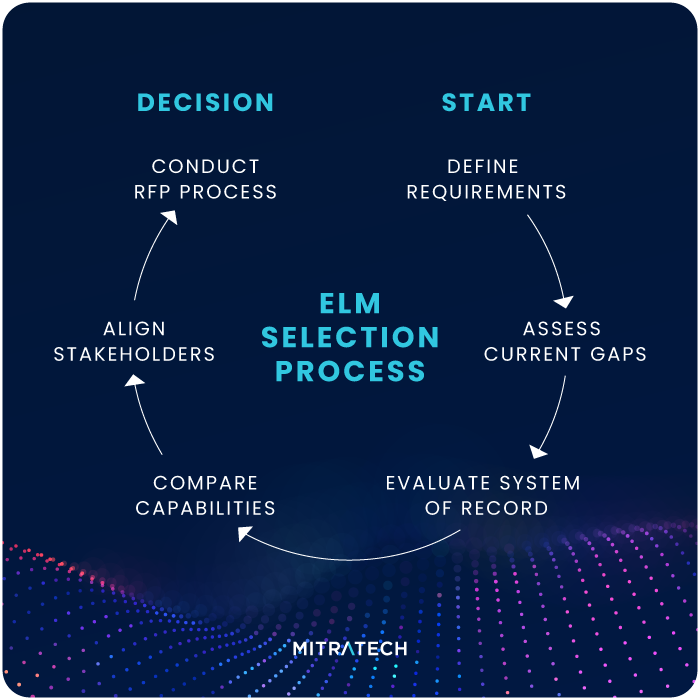
Step-by-Step: How to Evaluate Enterprise Legal Management Systems
1. Start with user needs and requirements
Before evaluating vendors, define the people, practice areas, and processes that would benefit most from improvement.
Work with stakeholders and end users to define:
- Business processes
- Operational challenges
- User requirements
- Business objectives
- Current bottlenecks and visibility gaps
This keeps the evaluation grounded in actual needs rather than product marketing.
Mitratech Expert Perspective: The best evaluations start with the work itself. If you begin with demos before defining how intake, matter updates, invoice review, approvals, reporting, and collaboration should work, it becomes much harder to distinguish between platforms.
In many legal departments, the biggest issues aren’t always obvious on paper; they show up in how people actually work day to day. If users are bypassing systems, relying on email or spreadsheets, or creating workarounds to get things done faster, those are important signals that something in the current process isn’t working.
Enterprise Legal Management Software Evaluation Criteria
-
System of Record
Centralized data
Centralized workflows
Unified operational management
-
事务管理
Flexible matter structures
Workflow tracking
Data capture
-
支出管理
e-Billing
预算编制
合规性
-
工作流程自动化
Routing
通知
标准化
-
报告和分析
Dashboards
KPIs
Decision support
-
Integration and Usability
Enterprise integrations
个性化
安全
-
安全与合规
审计轨迹
Secure storage
合规支持
What Differentiates Enterprise Legal Management Systems?
Unified Platform
- Single system of record
- Integrated workflows
- Better visibility and control
Explore a Unified ELM Platform
Built on Over 3 Decades of Export Innovation
Common Pitfalls When Choosing ELM Systems
Starting with technology instead of needs
It’s tempting to jump straight into demos and start comparing platforms. But when teams lead with technology instead of clearly defining their problems, the evaluation quickly turns into feature comparison instead of decision-making.
The result? A system that looks impressive but doesn’t actually solve the day-to-day friction Legal is dealing with.
Failing to define requirements
Many evaluations stall because requirements are too vague or too high-level. “Better reporting” or “improved efficiency” sounds right, but it’s not specific enough to guide a decision.
The teams that get this right take the time to map real workflows: how matters are opened, how invoices are reviewed, how approvals happen, and how leadership asks for data. Without that level of clarity, it’s difficult to tell vendors apart in a meaningful way.
Choosing disconnected tools
Point solutions can solve individual problems, but they often create new ones.
When matter data lives in one system, spend in another, and reporting somewhere else, Legal ends up stitching everything together manually, usually in spreadsheets. Over time, that creates gaps in visibility, inconsistent data, and more work than the system was supposed to eliminate.
Overlooking stakeholders
ELM decisions don’t happen in a vacuum. Legal might own the process, but IT, Finance, Procurement, and Accounts Payable all have a stake in how the system works.
When those perspectives aren’t included early, issues tend to surface later — like during implementation, integration, or rollou t— when they’re harder (and more expensive) to fix.
Focusing on features instead of outcomes
Most platforms can check the same boxes on a feature list. The real question is what those features actually enable.
The goal isn’t to buy software with the most capabilities. It’s to reduce manual work, improve visibility, control spend, and make it easier for Legal to operate as a business function. Teams that stay focused on outcomes tend to make more confident, defensible decisions.
Compare ELM Systems
with an Expert
How to Build a Business Case for an ELM System
To secure buy-in, the business case needs to do more than describe functionality; it needs to clearly connect Legal’s current challenges to measurable business impact.
Focus on outcomes such as:
- 提高效率
- Reduced staff workload
- Better control of outside counsel spend
- Improved visibility into legal operations
- Better decision-making through analytics and KPIs
- Greater cross-functional collaboration
- Long-term ROI
But more importantly, tie those outcomes to what’s actually happening today. Are attorneys spending time tracking down updates instead of moving matters forward? Is reporting taking days instead of minutes? Is outside counsel spend difficult to explain or forecast?
Those are the details that resonate with stakeholders.
Mitratech Expert Perspective: The strongest business cases don’t start with benefits—they start with friction. When you can clearly show where time is lost, where visibility breaks down, or where costs are harder to control, it becomes much easier to demonstrate how the right system can improve not just Legal, but the broader business.
Take the Next Step in Your Evaluation
Choosing enterprise legal management systems requires a structured, practical approach grounded in real business needs.
Get in touch with our experts to compare systems side by side and support a more informed decision.
常见问题
How do I choose the right enterprise legal management system?
Start with user needs, then evaluate capabilities across matter, spend, workflows, reporting, and integrations.
What features matter most?
Matter management, spend management, workflow automation, reporting, integration, and compliance.
What is the most important factor?
A centralized system of record with integrated workflows.
Why involve non-legal stakeholders?
They influence implementation, ROI, and enterprise alignment.
What are common mistakes?
Starting with tech, unclear requirements, disconnected tools, ignoring stakeholders, focusing on features.
What should an RFP include?
Requirements, checklist, demo scripts, shortlist, implementation plan, and comparative analysis.

©2026 Mitratech, Inc. 保留所有权利。
©2026 Mitratech, Inc. 保留所有权利。