Enterprise Legal Management (ELM) is the framework corporate legal departments use to manage legal work, control costs, and improve operational efficiency.
As legal teams manage increasing matter volume and complexity, they are under growing pressure to improve efficiency and control costs. Industry research from the Association of Corporate Counsel (ACC) shows that legal departments are facing rising workloads, cost constraints, and increasing expectations to deliver greater value to the business.
As legal teams face growing matter volume and complexity, ELM software enables them to move from reactive work to a more strategic, data-driven role within the business.
In this Article:
So, to be Direct: What Is Enterprise Legal Management (ELM)?
Enterprise Legal Management (ELM) is:
- A combination of legal operations practices, processes, and enabling technologies
- Designed to manage legal matters, control spend, and improve efficiency
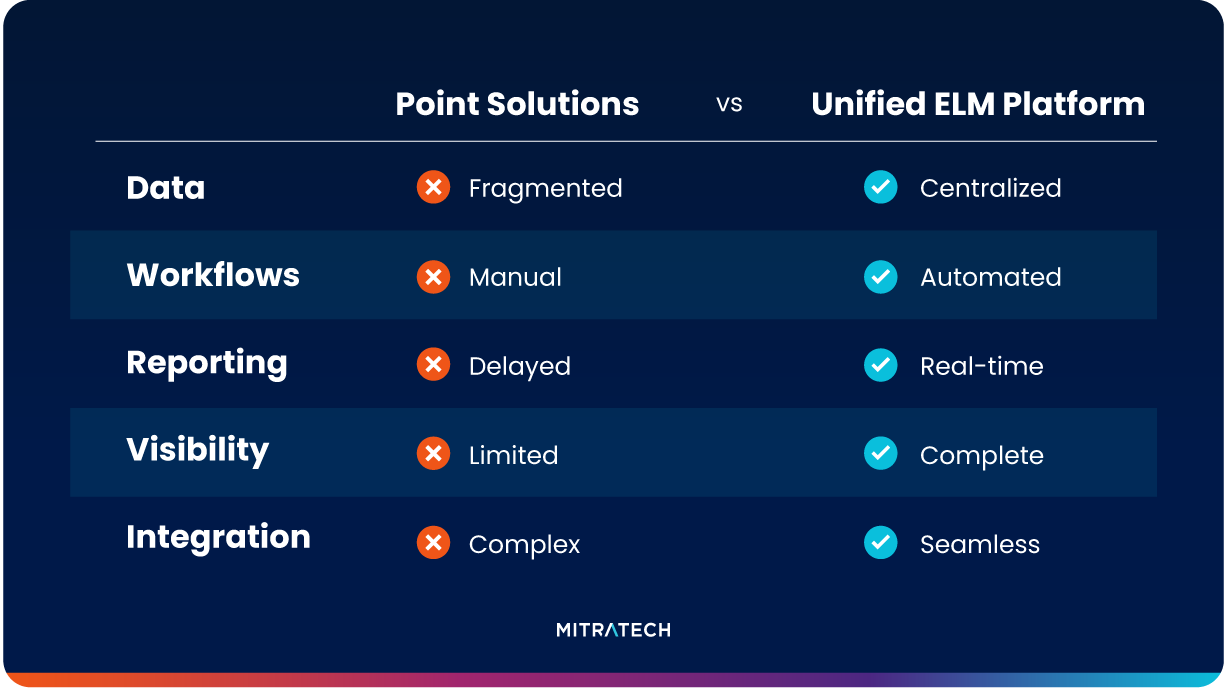
- Focused on centralizing workflows, data, and reporting across legal
- Used by in-house legal teams to reduce manual work and improve decision-making
How ELM Is Enabled
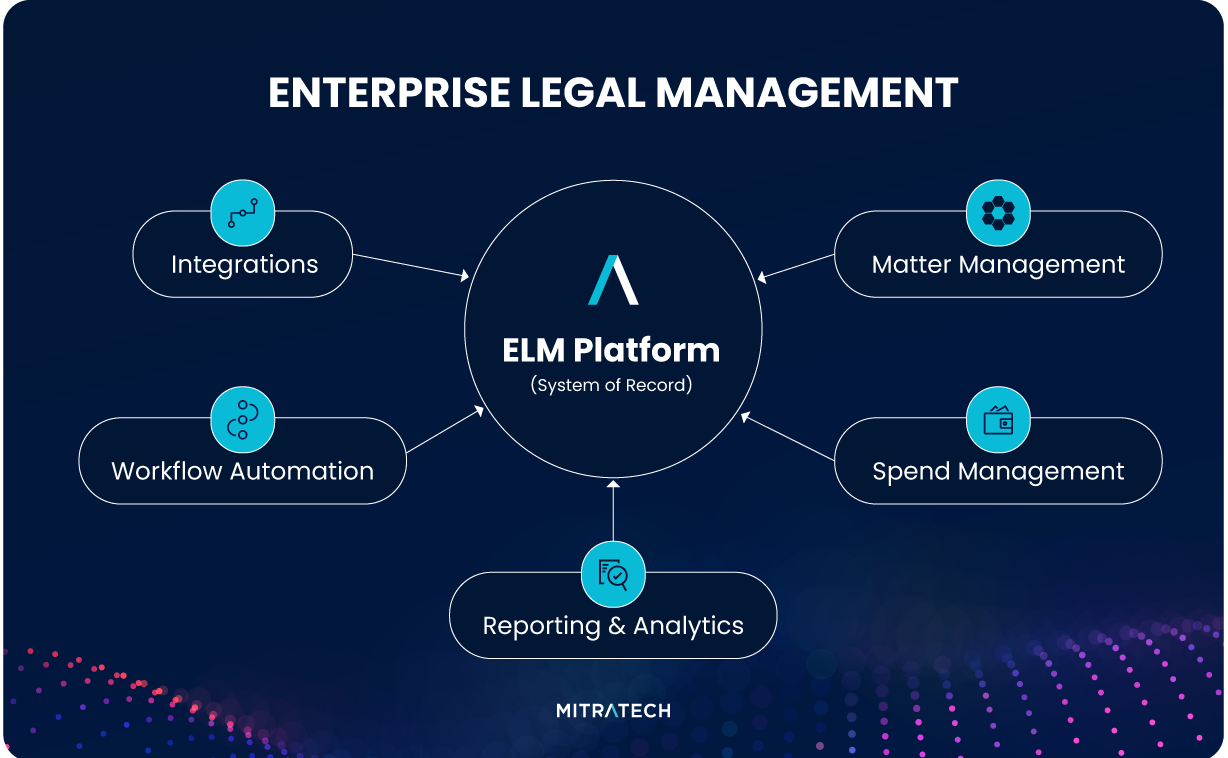
Enterprise legal management is typically supported by technology that helps legal teams centralize and streamline their operations.
These platforms enable organizations to:
- Manage legal matters in a centralized system
- Track and control legal spend
- Automate workflows and intake processes
- Generate reporting and analytics for better decision-making
Rather than operating across disconnected tools or spreadsheets, legal teams can use these systems to create a more consistent and scalable approach to managing legal work.
Key Components of Enterprise Legal Management
法律事务管理
Legal matter management software is a foundational component of ELM.
It enables teams to:
- Automate matter intake and opening processes
- Maintain a centralized system of record for all matters
- Standardize workflows using templates and predefined processes
- Track matter activity and generate reports
Impact:
- Faster matter intake and processing
- Improved data accuracy
- Greater visibility into legal work and risk
法律支出管理
Legal spend management provides visibility and control over outside counsel costs and other legal expenses.
It enables legal departments to:
- Track and manage outside counsel spend
- Enforce billing guidelines
- Improve budget forecasting and accuracy
- Analyze cost versus outcomes across firms and matters
Impact:
- Reduced legal spend
- More efficient invoice processing
- Better decision-making when selecting firms and timekeepers
报告和分析
Reporting and analytics are central to enterprise legal management. Legal teams use data to:
- Evaluate outside counsel performance
- Monitor costs and outcomes
- Identify inefficiencies
- Support strategic decision-making
Organizations that leverage data effectively can improve efficiency, reduce costs, and achieve better outcomes.
The Top Benefits
ELM technology helps legal departments operate more efficiently and strategically.
Key benefits include:
- Improved efficiency through automation of manual processes
- Reduced legal spend through better cost control and visibility
- Enhanced compliance through standardized workflows and auditability
- Increased visibility into legal work, risk, and performance
- Stronger alignment between Legal and the broader business
By centralizing operations and data, ELM enables legal teams to take a more proactive and strategic approach.
How to Get Started with Enterprise Legal Management
Legal teams should begin by assessing their current processes and identifying areas for improvement.
Step-by-Step Approach:
- Identify pain points in legal workflows
- Assess current tools and processes
- Define goals for efficiency, cost control, and visibility
- Evaluate how ELM can support these goals
- Align stakeholders across Legal, IT, and the business
Enterprise Legal Management at a Glance
| Capability | 目的 | Outcome |
|---|---|---|
| 事务管理 | Centralize legal work | Improved visibility and control |
| 支出管理 | Track and manage costs | Reduced legal spend |
| 报告与分析 | Generate insights | Better decision-making |
| 工作流程自动化 | 简化流程 | 提高效率 |
| Centralized Data | Single source of truth | Improved accuracy and compliance |
常见问题
How is enterprise legal management supported?
Enterprise legal management is supported by systems that centralize workflows, automate processes, and provide reporting and analytics across legal operations.
What are the main components of ELM?
Core components include legal matter management, legal spend management, reporting and analytics, and workflow automation.
How does ELM improve efficiency?
ELM improves efficiency by automating manual processes, centralizing data, and providing visibility into legal work and performance.
Why is enterprise legal management important for in-house teams?
It helps legal teams manage increasing workload, control costs, improve compliance, and operate more strategically within the business.