

Key findings from the AdvanceLaw GC survey
- Nearly nine in ten GCs expect AI-driven efficiency to show up in outside counsel bills; almost none have seen it.
- Only a small handful of legal departments have added explicit AI language to their outside counsel guidelines.
- Fewer than half of GCs have raised AI explicitly with a firm.
- On whether AI will be a real factor in choosing or managing outside counsel within the next year, about a third say yes, a third say no or not yet, and the rest say it depends on the matter.
General Counsel are nearly unanimous that artificial intelligence should be changing their relationships with outside counsel. What AdvanceLaw hears across conversations with legal departments throughout our network tells a more complicated story: expectation has outpaced action almost everywhere it’s been tested. Billing hasn’t moved. Outside counsel guidelines haven’t been rewritten. And the conversation about AI, as explicit as it would need to be, mostly isn’t happening yet. Here’s where things actually stand.
The Billing Evidence Gap: Are GCs Seeing AI Savings on Outside Counsel Bills?
Nearly nine in ten GCs expect AI-driven efficiency to eventually show up in their outside counsel bills, whether as lower rates, faster turnaround, or tighter scope. Almost none have actually seen it. Only a small fraction can point to a specific, identifiable AI line item on an invoice, and even then the savings typically fall short of what was promised.
The expectation isn’t unreasonable. Firms genuinely are using AI tools internally. What’s missing is the translation from efficiency gained to value passed through. Until that shows up in writing, on a bill, “using AI” and “billing differently because of it” are two separate claims, and most legal departments have only heard the first one.
Outside Counsel Guidelines Are Playing Catch-Up on AI
Only a small handful of legal departments have added explicit AI language to their outside counsel guidelines or engagement terms. Some say they are actively rewriting theirs right now. The large majority of legal departments haven’t made any updates.
That gap matters most around confidentiality and data governance. Most departments still lean on existing confidentiality and professional responsibility obligations rather than AI-specific contract language, but this is the area GCs flag most often as the next thing to get addressed. The focus will be on which tools are in use, on which matters; whether client data trains third-party models; whether work happens in closed, non-training environments.
The Expectation Is Universal. The Conversation Is Not.
Here’s the disconnect in two numbers: the overwhelming majority of GCs expect AI savings to show up in their bills, but fewer than half have raised AI explicitly with a firm. The expectation exists quietly, assumed rather than asked for, which is part of why it hasn’t been met.
Asked whether AI will be a real factor in choosing or managing outside counsel within the next year, the room splits roughly three ways: about a third say yes, unequivocally; a third say no, or not yet; the rest say it depends entirely on the matter. Nobody’s betting against AI mattering. They’re just not agreed on when, or where, it matters first.
Where This Goes Next
The appetite for AI is concentrated where the stakes and the document volume are both high.
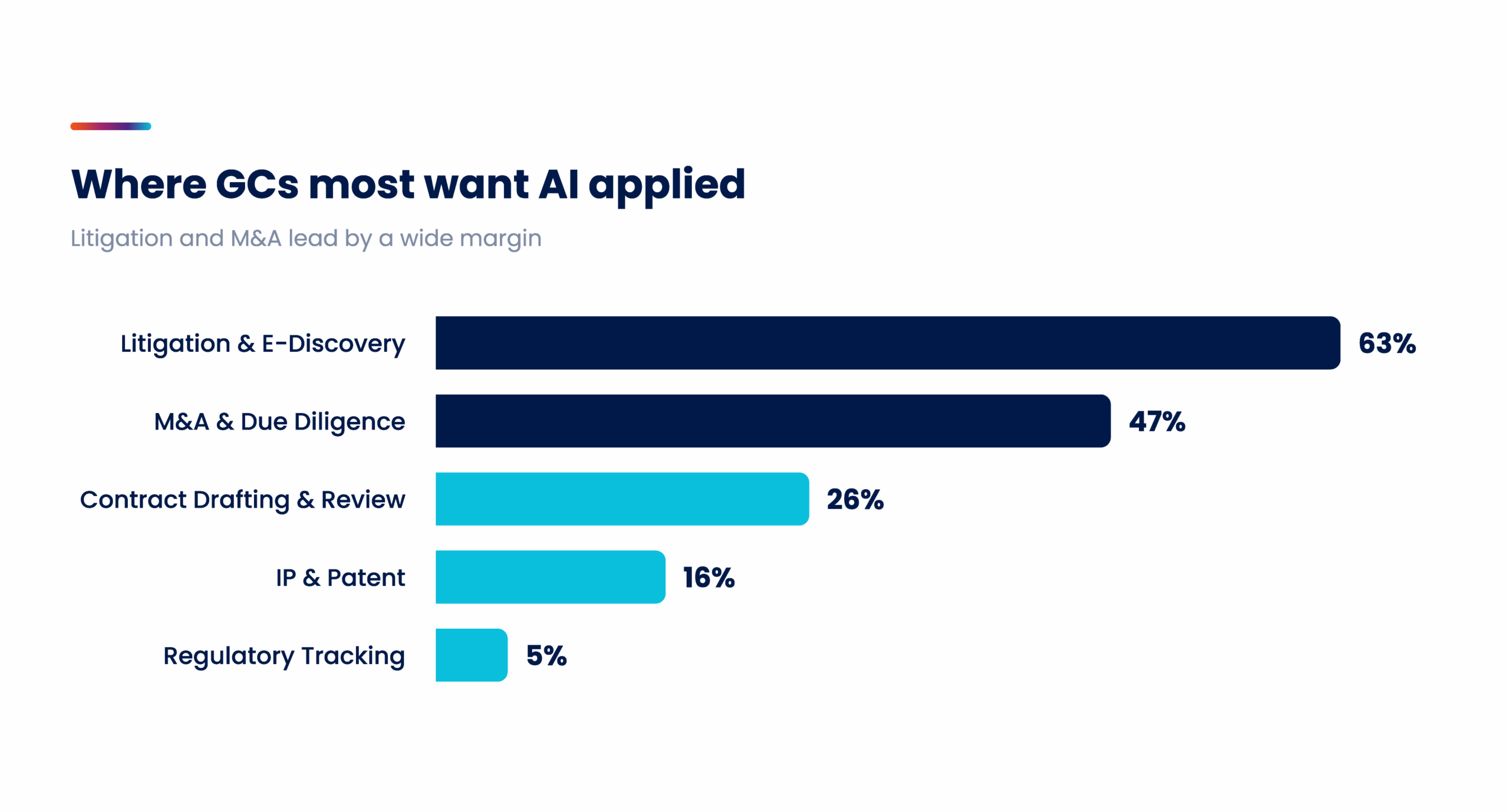
But wanting AI in litigation and M&A is different from firms actually deploying it there. The tools GCs report their firms using skew general-purpose, not practice-specific.
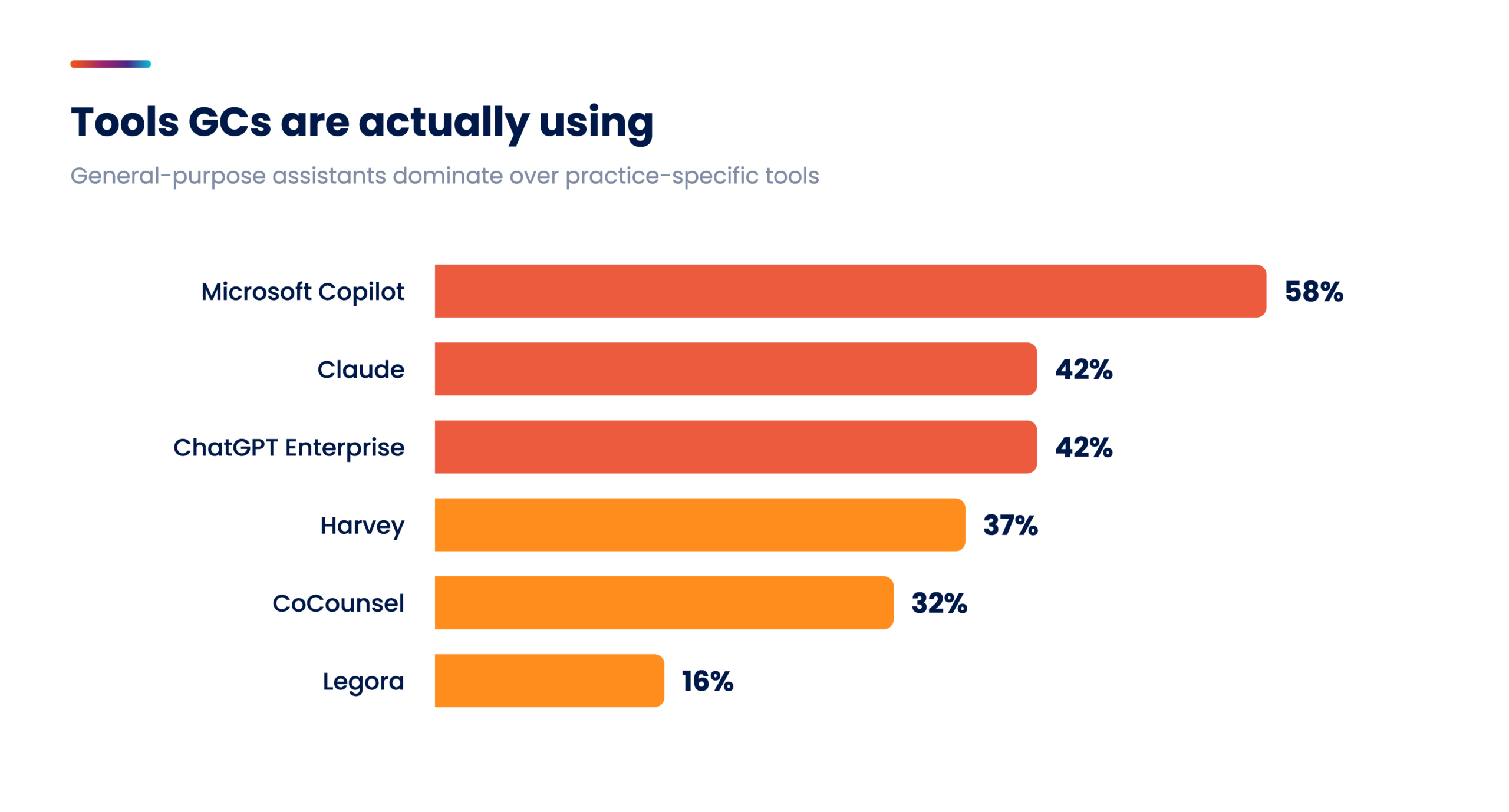
Put the two charts together and a pattern emerges: most firms have adopted a general-purpose assistant and stopped. Fewer have built the practice specific workflows, document review pipelines, or litigation-support tooling that would actually move the needle in the areas GCs care most about. That’s optimization, not innovation, and it’s the gap GCs are asking their firms to close.
What Legal Should Do First for AI in relation to Outside Counsel
Three things worth doing this quarter, regardless of firm size or practice mix:
-
Put disclosure and data-use language in your outside counsel guidelines. Require firms to say which AI tools they use and how client data moves through them. This is the fastest-moving gap, and the one GCs most often say is coming next.
-
Make “show me the savings” a standing question, not a one-time one. Ask firms at the beginning of a new matter how AI will be factored into staffing, scope, or price, every time, not just when a firm brings it up first.
-
Ask for a specific example, not a yes-or-no. “Do you use AI?” invites a marketing answer. “Show me one matter where AI changed your staffing, timeline, or price” invites an honest one.
Frequently Asked Questions
Do outside counsel guidelines need AI-specific language?
Are law firms passing AI savings on to clients?
What should a GC ask a law firm about AI?
Will AI influence which outside counsel GCs hire?
Want to see how AI can support your legal department? Explore Mitratech’s AI solutions for legal operations or get the AI in legal eBook.