
The best way to think about your policy management technology? Through the lens of the policy lifecycle.
Organizational teams now span cities, states, and countries — each with its own evolving regulations and shifting compliance requirements. Whether you’re a global corporation or a growing startup, keeping policies relevant and accurate in this complex environment requires going back to the basics: effective policy implementation that turns well-crafted documents into everyday behaviors while ensuring compliance with existing management processes.
The solution is a simple, repeatable policy process that ensures consistency. From policy formulation and adoption through implementation, the decision-making process becomes clearer when you define owners, timelines, and metrics for each team member. The right workflows automate reviews and review of approval, streamline handoffs with automated reminders, and strengthen policy lifecycle management without adding administrative overhead. The result is a policy program that reduces risk and proves its impact.
A Quick Refresher: What is the Policy Lifecycle?
The policy lifecycle is the end-to-end process through which a new policy is implemented and maintained within an organization. It is traditionally understood in 4-5 stages, including some variation of creation, communication, management, and maintenance.
But when it comes to bringing technology solutions into the fold to help automate and streamline your policy management, it helps to take a more granular look at the policy lifecycle. Where do policy review and approval or attestation fall in the process, for example, and where can technology step in to help organizations mitigate risk, optimize efficiency, and ensure compliance with evolving compliance requirements?
A clear model supports sound policymaking and sharper policy decisions, improves the decision-making process, and enables policy analysis with metrics you can defend in an audit.
The Seven Stages of the Policy Lifecycle
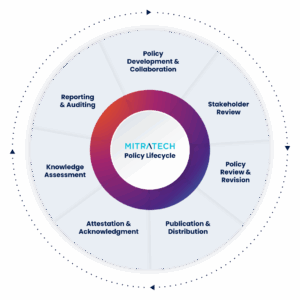
For many, the best way to think about technology and its requirements is to get to the meat of your policy lifecycle. What needs to happen in order for your company to monitor, manage, update and proliferate internal and external policies? And how can tech support, streamline, and optimize these moments? You can approach this review using the seven stages of the policy lifecycle:
-
Stage One: Policy Development and Collaboration
Engage relevant stakeholders, such as legal, HR, and other pertinent parties in the process of crafting policies. Collaboratively develop policies that align with organizational needs and legal requirements.
Include agenda setting to clarify the problem, scope, and owners before drafting begins. Define success metrics at this stage so you can evaluate policy effectiveness later and confirm alignment with compliance requirements.
Tech Translation: Does your policy management software facilitate collaboration among stakeholders and streamline the policy development process? Look for version control, redlining, task assignment, and workflows that track contributions across teams.
-
Stage Two: Stakeholder Review
Facilitate comprehensive review and approval of newly developed policies by different stakeholders.
Tech Translation: Does your software assist in gathering and consolidating feedback from diverse stakeholders during the policy review process?
-
Stage Three: Policy Review and Revision
Regularly update policies, either on an annual basis or in response to recent updates in laws or regulations. This ongoing process ensures that policies remain current and effective.
Use structured checklists to document legal basis, operational impact, and change rationales. Tie every revision to a policy analysis that records risks, controls, and compliance requirements, and capture each decision within the formal approval process.
Tech Translation: Does your policy management software help you track policy review schedules and ensure timely updates? Can it route revisions to the next team member, log approvals, and preserve an audit trail to demonstrate compliance and drive operational efficiency?
-
Stage Four: Publication and Distribution
Effectively communicate policies to the appropriate audience within the organization. Segment audiences by role, geography, and risk profile so each person receives the new policy or update that applies to them. Time the release to related initiatives like system rollouts or process changes to maintain operational efficiency and ensure compliance alignment. Use automated reminders to prompt readers who have not accessed the latest version.
Tech Translation: Has your policy management platform simplified the distribution of policies to employees and stakeholders while ensuring everyone receives the most current versions? Prioritize single-source publishing, automated notifications, automated reminders, and policy access within the systems people already use.
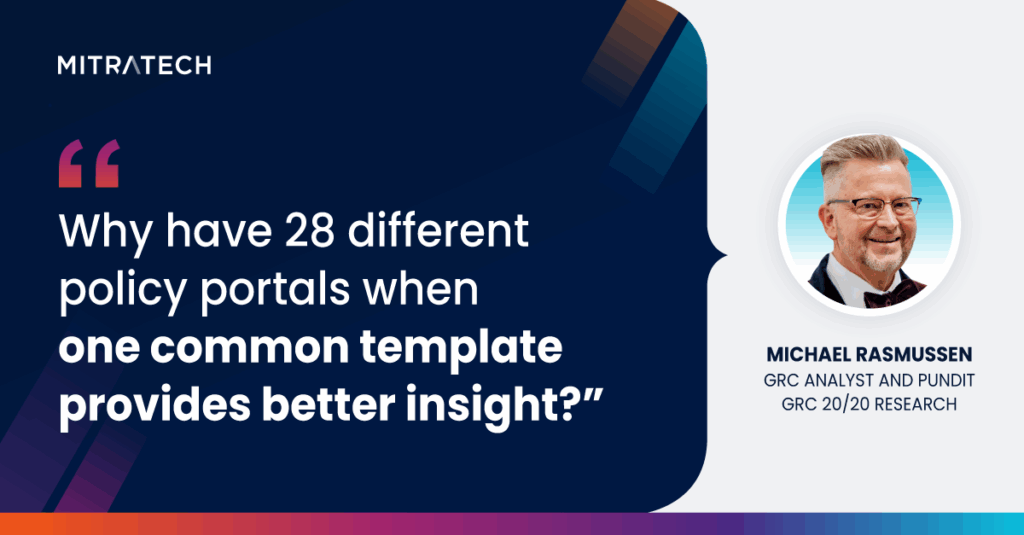
For context, GRC 20/20’s Michael Rasmussen argues for a single access point to policies:
-
Stage Five: Attestation and Acknowledgement
Establish a mechanism for employees to acknowledge policy changes. Define and automate a clear timeframe for employees to attest to the modifications, ensuring that the attestation process is efficient.
Escalate nonresponses with automated reminders and capture e-signatures where required. Record attestations by version to avoid confusion with older policies and provide traceable evidence for compliance requirements.
Tech Translation: Does your policy management system automate and streamline the process of collecting employee attestations for policy changes? Seek dashboards that show completion status by department and manager to improve oversight and operational efficiency, with the ability to nudge the appropriate team member when deadlines are missed.
-
Stage Six: Knowledge Assessment
Gauge the level of understanding among employees regarding the HR policies they have acknowledged. Implement measures to assess comprehension and address any gaps through training or clarification. Consider connecting assessments to compliance training that adapts to each learner.
Tech Translation: Does your policy management software help in automatically assessing employee comprehension of policies and facilitate targeted training when needed?
-
Stage Seven: Reporting and Auditing
Create a system for tracking policy adherence and acknowledgment. Regularly generate reports to monitor compliance levels and conduct audits to ensure that policies are being followed consistently across the organization.
Keep the board view tight: highlight hotline reports, areas of regulatory risk, repetitive red flags that haven’t been resolved, and status of internal investigations. Pair each item with an owner and next step. For a concise checklist of what to show, see our one-pager, 7 Ethics and Compliance Metrics that Matter to the Board.
Tech Translation: Does your technology assist in automatically tracking policy compliance, generating compliance reports, and simplifying the audit process to ensure adherence?
Frequently Asked Questions (FAQ)
What is the difference between policy lifecycle and policy lifecycle management?
Policy lifecycle describes the key stages a policy moves through. Policy lifecycle management refers to the people, processes, and technology that automate, streamline, and govern those stages to improve operational efficiency and ensure compliance.
How does agenda setting fit into the lifecycle?
Agenda setting clarifies the problem and goals before drafting. It keeps initiatives focused, speeds decision-making, and ensures that compliance requirements are addressed early through a consistent approval process.
Which metrics should we track throughout the policy lifecycle?
Track distribution rates, attestation completion, knowledge scores, incident trends, and audit findings. Tie each metric to a stage so you can pinpoint gaps and improve both compliance and operational efficiency.
When should we perform policy analysis?
Perform analysis during development and again after publication using evidence from assessments, hotline data, and audits. Use the results to inform the next revision and verify ongoing compliance.
To learn more about how to leverage technology to get ahead – and stay ahead – with compliance, check out this white paper. (While it explores HR policies in particular, it includes an excellent overview of how to evaluate your policy management software overall – and features a checklist to save you time).
Streamline Risk with a Smarter Policy Lifecycle
A disciplined seven-stage model turns policy work into an effective policy program that enhances operational efficiency, reduces risk, and proves compliance results.
Explore our case studies to see results from teams like yours. Want to see the lifecycle in action? Request a demo and walk through each stage with our experts.
TL;DR
Seven stages. Clear owners. Automated workflows. Metrics that tell the story. That is policy lifecycle management that scales.