
La normativa DORA, la NIS2 y las normas de la SEC sobre divulgación de información en materia de ciberseguridad han convertido el riesgo de terceros en una responsabilidad que recae en el consejo de administración.
El panorama de amenazas está agravando la presión: las vulnerabilidades en la cadena de suministro de software , la proliferación de herramientas de IA y el riesgo de concentración entre los proveedores de tecnología y los ecosistemas de proveedores son ahora riesgos habituales, no casos aislados. Lo que está cambiando es la forma en que las organizaciones están respondiendo. Los programas que están ganando terreno integran la gestión de riesgos de terceros (TPRM) en la función más amplia de riesgo y cumplimiento normativo, utilizando la información sobre proveedores para orientar la toma de decisiones ejecutivas y la postura de riesgo de la empresa, en lugar de canalizarla a través de un ciclo de revisión anual.
A continuación se aborda el tema en su totalidad: qué es la gestión de riesgos de proveedores (TPRM) y qué factores impulsan su adopción; cómo se estructura un programa maduro a lo largo del ciclo de vida del proveedor; los beneficios cuantificables de aplicarlo correctamente; y los escollos de la implementación que suelen frenar los programas, tanto si se está poniendo en marcha un programa por primera vez como si se está sometiendo a prueba uno ya existente.
- ¿Qué es la gestión de riesgos de terceros?
- The TPRM Lifecycle: A Quick Overview
- Impulsores del programa de gestión de riesgos de terceros
- ¿Quién debe participar en la gestión de riesgos de terceros?
- Influencias reglamentarias de la GTRC en la gestión de riesgos
- El papel de la inteligencia artificial en la GTPR
- ¿Cuál es el valor de la GTPR?
- Implantación del programa de gestión de las relaciones con los clientes
- Preguntas frecuentes
¿Qué es la gestión de riesgos de terceros?
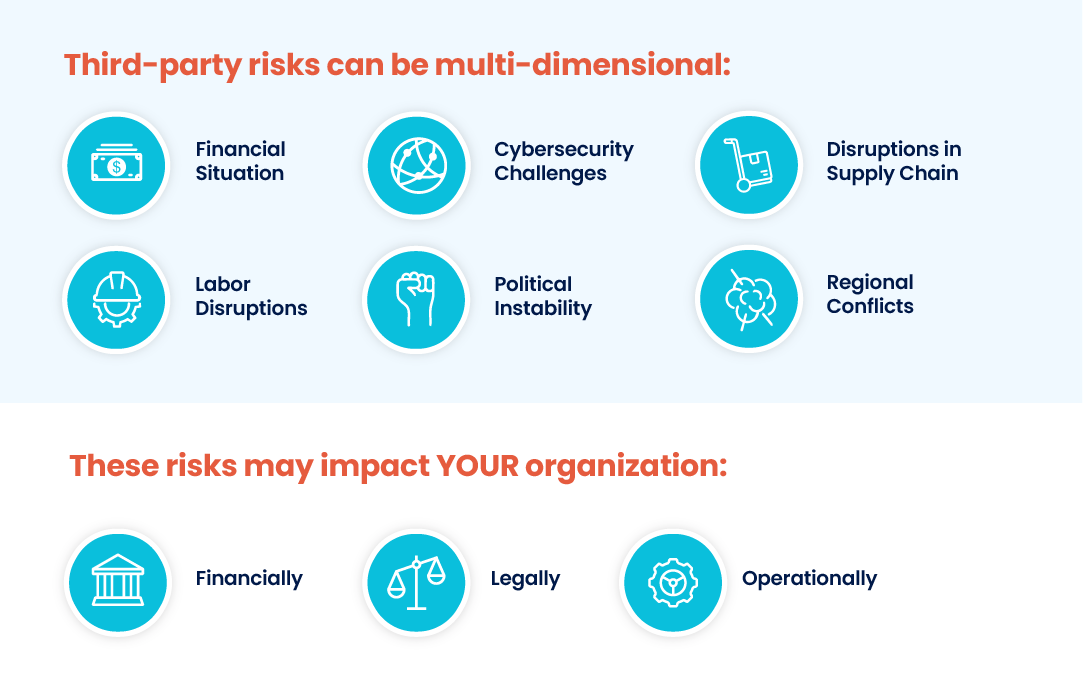
La gestión de riesgos de terceros (GTRP) es el proceso de identificar, evaluar y mitigar los riesgos asociados a la contratación de terceros externos, como vendedores, proveedores, contratistas y socios comerciales. Implica una diligencia debida para abordar los riesgos potenciales que podrían afectar a las operaciones, la salud financiera, la ciberseguridad, la situación jurídica o la capacidad de una organización para servir a sus clientes. Estos riesgos pueden abarcar incidentes de ciberseguridad, interrupciones de la cadena de suministro, escasez de mano de obra, inestabilidad financiera, factores políticos y conflictos regionales. La GTPR permite a las organizaciones gestionar los riesgos de forma proactiva y planificar respuestas en lugar de reaccionar a los problemas cuando surgen, lo que garantiza la continuidad del negocio y protege a las principales partes interesadas.
The TPRM Lifecycle: A Quick Overview
TPRM risk begins at vendor selection and doesn’t end until a relationship is fully offboarded. Each stage carries its own exposure, and skipping oversight at any single stage is how mature-looking programs still get blindsided.
The lifecycle runs through seven stages: sourcing and selection, intake and onboarding, inherent risk scoring, risk assessment, risk monitoring, SLA and performance management, and offboarding and termination. Risk shows up differently at each one, from the financial and security exposure of an unvetted vendor to the access and data that lingers after a contract ends.
Each of these stages carries its own failure modes. Getting them right, from how granular a risk-tiered questionnaire needs to be to when a vendor’s own subcontractors warrant scrutiny of their own, is what we walk through in more depth in the vendor risk lifecycle guide.
A la hora de planificar tu estrategia de gestión de riesgos de proveedores (TPRM), ten en cuenta que las circunstancias de las partes pueden cambiar en cualquier momento durante la colaboración. Detectar y gestionar esos cambios es fundamental para el éxito de su organización. Los proveedores pueden modificar sus operaciones comerciales, su cadena de suministro de materiales clave puede verse interrumpida o las autoridades regionales pueden modificar los requisitos de importación y exportación. Por ejemplo, las leyes de protección de datos están cambiando rápidamente en todo el mundo. Todas estas situaciones se están produciendo en la actualidad, y las empresas que han implementado de forma eficaz un proceso de TPRM están prosperando, mientras que otras se están quedando atrás.
Dado el rápido ritmo de los cambios, surge la necesidad de que las organizaciones supervisen y realicen un análisis inicial de la información disponible casi en tiempo real para identificar y gestionar sus riesgos. Este requisito exige que algunos de los procesos automaticen la recopilación y la difusión de información sobre los proveedores externos. Una automatización eficaz permite a su departamento de gestión de riesgos de terceros (TPRM) identificar los riesgos e impulsar las medidas correctivas antes de que su organización sufra daños a su reputación.
Impulsores del programa de gestión de riesgos de terceros
Existen varios requisitos normativos y de cumplimiento que exigen la gestión del riesgo de terceros y que pueden proporcionar un marco eficaz para mitigar el riesgo de los proveedores. Los requisitos normativos que impulsan los programas de gestión del riesgo de terceros (TPRM) abarcan un amplio espectro de mercados, proveedores y datos, y suelen depender del tipo de organización (por ejemplo, normativas y directrices de CMMC, EBA, FCA, FFIEC, HIPAA, NERC, NIST, NYDFS, OCC y otros), la ubicación de su organización (por ejemplo, requisitos de privacidad o de la carta constitutiva estatal) o la ubicación de sus clientes (por ejemplo, el RGPD o la CCPA). Lo fundamental que hay que comprender en relación con estos requisitos es garantizar que su programa tenga en cuenta qué datos está obligada a proteger su organización, dónde residen habitualmente sus clientes y los requisitos estándar que deben cumplir sus proveedores para prestar sus servicios. Incluya estos requisitos en sus acuerdos y extiéndalos a los proveedores que trabajen con los datos en cuestión.
La implementación de programas de TPRM por parte de las organizaciones viene determinada por lo siguiente:
- Cumplimiento de los requisitos reglamentarios.
- Riesgo de ciberseguridad.
- Ventajas competitivas de un programa eficaz de GTPR.
- Impulsores internos de las compras y la eficiencia.
- Gestión del riesgo financiero y operativo interno.
- Cumplir los requisitos de los clientes.
Independientemente del motivo específico de su organización para establecer un programa de GTPR, es fundamental identificar y trabajar con todas las partes interesadas internas, como ejecutivos, juntas, adquisiciones, auditoría interna, finanzas, TI, seguridad de la información, asuntos legales y cumplimiento, para establecer sus flujos de trabajo.
¿Quién debe participar en la gestión de riesgos de terceros?
A la hora de poner en marcha un programa de gestión de riesgos de terceros (TPRM), asegúrate de que todas las partes interesadas, tanto internas como externas, que se vean afectadas participen en su diseño. Como mínimo, ten en cuenta a las siguientes como partes interesadas internas:
- Ejecutivos (CEO, CFO, CIO, COO, CISO, etc.)
- Consejo General
- Miembros del Consejo
- Auditores internos
Las partes interesadas externas constituyen otro grupo clave que hay que tener en cuenta a la hora de desarrollar tu programa. Entre las partes interesadas externas se incluyen:
- Vendedores
- Reguladores
- Clientes

Dado que los programas de TPRM rara vez se ponen en marcha desde el inicio de una empresa, es importante tener en cuenta los acuerdos y programas existentes con proveedores externos y asegurarse de que se analicen a fondo en relación con el programa de TPRM propuesto. Hay que asegurarse de que se registren las discrepancias y de que se elabore un plan para abordar los riesgos no mitigados, cuyo cumplimiento se supervise hasta su finalización.
Influencias reglamentarias de la GTRC en la gestión de riesgos
Las normas reglamentarias son el principal motor de los programas de GTPR. Los programas normativos son específicos de:
- Sanidad
- Contratación pública
- Aceptación de tarjetas de crédito
- Servicios financieros
- Banca
- Fabricación

Todo ello requiere la implantación de un proceso que abarque todo el ciclo de vida de la gestión de riesgos de terceros (TPRM). Estos requisitos suelen venir determinados por el tipo de datos sensibles que se recogen en el desarrollo habitual de la actividad empresarial.
Un ejemplo destacado de este tipo de gestión de riesgos impulsada por la normativa es una parte importante de la norma industrial PCI-DSS, que define a los proveedores externos y exige que estos no transmitan «datos de los titulares de tarjetas, en nombre de clientes u organizaciones, a proveedores que puedan comprometer la seguridad de sus datos y su entorno». Esto significa que, si bien las empresas están obligadas a desarrollar por sí mismas el programa de ciberseguridad necesario, también deben supervisar los programas de ciberseguridad de los proveedores que gestionan el acceso a datos sensibles, incluso si dichos proveedores mantienen el riesgo por debajo de un umbral determinado.
Otro ejemplo son los programas federales y la contratación pública, que exigen una gestión estricta de la seguridad de todos los proveedores con acceso a la información. Este proceso va mucho más allá de los simples cuestionarios y del intercambio de documentación; también puede incluir análisis de los entornos internos y declaraciones legales de los directivos sobre las medidas de protección de datos implantadas. La complejidad de los terceros implicados, la posibilidad de que surjan conflictos de intereses y el riesgo de pérdidas económicas están llevando a las empresas a mejorar continuamente sus prácticas de gestión de riesgos y sus estrategias de mitigación de riesgos.
El modelo tradicional de gestión de riesgos de terceros (TPRM) se basaba en visitas in situ, la revisión manual de cuestionarios y evaluaciones dirigidas por consultores que se realizaban a intervalos definidos. Ese enfoque no puede seguir el ritmo de la magnitud y la distribución de las redes de proveedores actuales. Las organizaciones que gestionan cientos o miles de terceros en múltiples zonas geográficas necesitan una recopilación automatizada de datos, una supervisión continua y herramientas de flujo de trabajo para evaluar y realizar un seguimiento del riesgo de los proveedores a la velocidad que exige el entorno.
Si a las condiciones actuales les sumamos la creciente complejidad y el alcance de las cadenas de suministro, esto simplemente no es viable utilizando los procesos que han dado buenos resultados en el pasado. Para tener éxito en la gestión de riesgos de los proveedores (TPRM), es necesario recurrir en mayor medida a la automatización y a herramientas diseñadas para recopilar y realizar un análisis inicial de los datos de los proveedores.
El papel de la inteligencia artificial en la GTPR
A medida que las organizaciones dependen cada vez más de las cadenas de suministro interconectadas y de las relaciones con terceros, es imperativo disponer de información exhaustiva sobre los riesgos y tomar decisiones oportunas. El crecimiento exponencial de los datos procedentes de diversas fuentes ofrece la oportunidad de aprovechar la IA y los análisis avanzados, lo que permite evaluaciones de riesgos más profundas, capacidades predictivas y supervisión en tiempo real. El aumento del escrutinio normativo y el incremento de las amenazas sofisticadas hacen aún más necesarios los enfoques de gestión de riesgos basados en datos y en IA.
La adopción de tecnologías relacionadas con la inteligencia artificial (IA) puede resultar fundamental para reforzar un programa moderno de gestión de riesgos de terceros (TPRM). Las capacidades de la IA agilizan los procesos de TPRM y de gestión de riesgos de proveedores (SRM), lo que permite adoptar un enfoque más eficiente y proactivo en redes complejas de terceros:
- Automatización de tareas: Los sistemas basados en IA pueden agilizar las evaluaciones rutinarias de riesgos de terceros, el análisis de datos y la elaboración de informes. Esto mejora la eficiencia y la precisión, al tiempo que ayuda a los gestores de riesgos de terceros a centrarse en actividades de más alto nivel.
- Análisis predictivo: Los modelos de IA pueden analizar datos históricos y patrones para predecir riesgos potenciales, ayudándote a tomar medidas proactivas para mitigarlos.
- Detección de anomalías: Los algoritmos de IA pueden identificar patrones o comportamientos inusuales que pueden indicar fraude, brechas de seguridad u otros riesgos.
¿Cuál es el valor de la GTPR?
Un programa de gestión de riesgos de terceros aporta valor a lo largo de todo el ciclo de vida del proveedor, desde la selección inicial hasta la baja. Esto es lo que un programa bien consolidado aporta a tu organización:
-
Visibilidad de terceros
El TPRM ofrece una visión estructurada y centralizada de qué proveedores tienen acceso a sus sistemas y datos, los servicios que prestan y los riesgos que plantean. Sin esta visibilidad, las organizaciones no pueden evaluar con precisión su exposición a las interrupciones causadas por las redes de terceros y cuartos.
-
Detección precoz de riesgos
La combinación de evaluaciones periódicas con un seguimiento continuo permite a tu organización identificar los riesgos antes de que se conviertan en incidentes. Las organizaciones que detectan los problemas de forma temprana dedican menos tiempo a la gestión de crisis y más tiempo a la toma de decisiones deliberadas sobre los riesgos.
-
Cumplimiento de la normativa
La mayoría de los principales marcos normativos —entre ellos, la HIPAA, la norma PCI DSS, el RGPD y el CMMC— exigen pruebas documentadas de los controles de riesgos de terceros. Un programa estructurado de gestión de riesgos de terceros (TPRM) genera los registros de evaluación, las pistas de auditoría y la documentación de las medidas correctivas que esperan los organismos reguladores y los auditores.
-
Protección de la reputación
Los incidentes relacionados con terceros tienen consecuencias para la reputación que van mucho más allá de la propia relación con el proveedor. Las organizaciones que cuentan con programas maduros de gestión de riesgos de terceros (TPRM) tienen muchas menos probabilidades de sufrir un daño a su marca tras una filtración que haya salido a la luz pública o un incumplimiento normativo relacionado con un proveedor.
-
Ventaja competitiva
Las organizaciones que pueden demostrar una estrategia madura de gestión de riesgos de los proveedores (TPRM) gozan de una preferencia cada vez mayor por parte de los compradores empresariales, los sectores regulados y los socios que llevan a cabo sus propios procesos de diligencia debida con respecto a los proveedores. Sus controles de riesgo se convierten en un factor diferenciador en las decisiones de contratación.
-
Resistencia operativa
Cuando se producen acontecimientos de gran envergadura que alteran las cadenas de suministro —como crisis geopolíticas, desastres naturales y conflictos regionales—, las organizaciones que cuentan con programas activos de gestión de riesgos de proveedores (TPRM) están mejor preparadas para identificar rápidamente los riesgos, poner en marcha planes de contingencia y garantizar la continuidad del servicio a sus clientes.
-
Rentabilidad
Un programa de gestión de riesgos de terceros (TPRM) bien estructurado reduce el coste que supone la detección de riesgos en fases avanzadas, las sanciones normativas y la respuesta ante incidentes. Realizar la diligencia debida desde el principio resulta considerablemente más económico que subsanar una infracción, una auditoría fallida o una interrupción provocada por un proveedor una vez que se ha producido.
-
Decisiones fundamentadas sobre proveedores
TPRM proporciona la base de datos necesaria para tomar mejores decisiones empresariales sobre con qué proveedores colaborar, con qué nivel de tolerancia al riesgo y en qué condiciones contractuales. La selección de proveedores basada en el riesgo reduce la exposición en todas las relaciones con terceros que gestiona su organización.
Tu programa de TPRM no tiene por qué empezar desde cero
Consigue la guía de 10 pasos para crear y perfeccionar tu programa de gestión de riesgos de terceros.
Descargar el marco de referenciaImplantación del programa de gestión de las relaciones con los clientes
Una vez que haya decidido implantar un programa de gestión de las relaciones con los clientes, deberá plantearse una serie de preguntas importantes que constituirán la base de su programa. Estas preguntas incluyen:
- ¿Contrata a un socio para que le ayude a poner en marcha y aplicar el programa?
- ¿Cómo gestiona las expectativas de sus interlocutores internos?
- ¿Necesita asignar responsabilidades en caso de violación de datos?
- ¿Cuáles son los requisitos exactos que deben cumplir los terceros para hacer negocios?
- ¿Comprenden las partes interesadas externas los requisitos y pueden aplicarlos?
- ¿La imposición de estos requisitos modificará la relación financiera con los proveedores?
- ¿Cómo se extiende este programa a las relaciones existentes?
Las organizaciones deben centrarse en reunir a las personas, los procesos y las tecnologías adecuadas para poner en marcha un programa de gestión de riesgos de terceros. Comprender el equilibrio y los requisitos de cada una de estas funciones es fundamental para el buen funcionamiento de su programa.
Para abordar las exposiciones al riesgo en entornos TPRM, debe habilitar normas y lenguaje organizativos en las siguientes áreas:

- Establecer los requisitos de los contratos y acuerdos de nivel de servicio para abordar los compromisos relacionados con los riesgos.
- Analice el perfil de riesgo del proveedor con el perfil de riesgo del encargo o del servicio prestado.
- Habilitar un proceso de elaboración de informes impulsado por la supervisión dinámica y la evaluación de riesgos basada en sucesos.
- Combina los enfoques de evaluación periódica de riesgos ( basados en información facilitada por los propios interesados) y de seguimiento continuo de riesgos (basados en información facilitada por terceros) para lograr una identificación de riesgos de principio a fin.
- Implantar soluciones tecnológicas para integrar la gestión de adquisiciones, resultados y riesgos en una plataforma unificada que proporcione a las partes interesadas información actualizada bajo demanda para satisfacer sus necesidades específicas.
Es importante señalar que, a la hora de establecer relaciones con las partes interesadas internas y externas, no todos los incentivos tienen por qué ser punitivos o restrictivos. El establecimiento de requisitos contractuales o de acuerdos de nivel de servicio debe incluir estándares mínimos de rendimiento, pero también puede incluir «recompensas» por el cumplimiento de funciones críticas de gestión de riesgos. Además, el análisis de los requisitos del proveedor frente a los de su organización puede reportar enormes beneficios para ambas partes. Al aprovechar el cumplimiento normativo ya existente, es posible reducir los costes para ambas partes en beneficio mutuo.
Una implementación eficaz de la gestión de riesgos de terceros (TPRM) requiere la tecnología adecuada y la infraestructura organizativa que la respalde: flujos de trabajo documentados, tolerancias de riesgo definidas, consenso entre las partes interesadas sobre los criterios de escalación y un plan para integrar las relaciones con los proveedores que ya están en marcha. Las organizaciones que maduran rápidamente suelen empezar con un ámbito de aplicación reducido y bien gestionado, y luego lo amplían. No obstante, tanto si se está desarrollando de forma incremental como si se está poniendo en marcha un programa completo, contar con el socio adecuado puede acelerar tanto el diseño como la ejecución.
Descubre cómo Mitratech TPRM puede ayudarte a ampliar y optimizar la gestión de riesgos de proveedores
Empieza aquíPreguntas frecuentes
What is inherent risk scoring in TPRM?
What is the difference between periodic risk assessments and continuous risk monitoring?
What role do regulations play in TPRM?
What tools are used for third-party risk management?
Nota del editor: Esta entrada se publicó originalmente en Prevalent.net. En octubre de 2024, Mitratech adquirió Prevalent, una plataforma de gestión de riesgos de terceros basada en inteligencia artificial. El contenido se actualizó en mayo de 2026 para incluir información acorde con nuestra oferta de productos, los cambios normativos y los requisitos de cumplimiento.