Mitratech Learn + Workplace Safety
Workplace Training & Safety
A practical look at what workplace training and safety require today, how to tell where your organization stands, and how Mineral Learn helps you assign, track, and prove every required course — from state-mandated harassment prevention to OSHA safety.

What is Workplace Compliance Training?
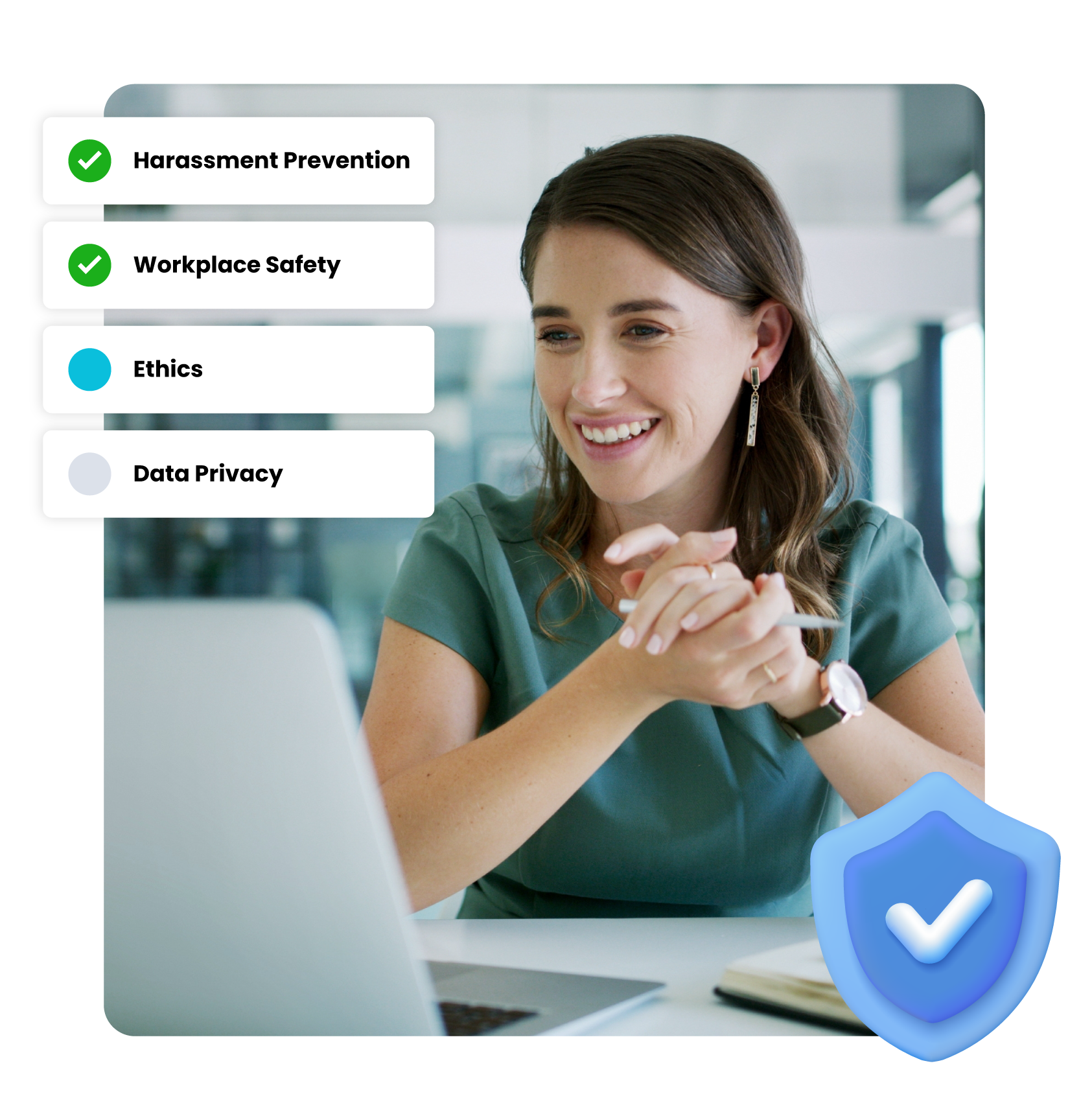
Workplace compliance training is the instruction employers are legally or contractually required to provide, covering topics like harassment prevention, workplace safety, ethics, and data privacy. It does two jobs at once: it reduces real risk to your people and your organization, and it creates a documented record that the training actually happened. Alongside it sits skills-based training, which isn’t mandated but keeps your workforce capable and engaged.
Why Training & Safety Keep Getting Harder?
Requirements are broadening and accelerating, while the teams responsible for them rarely grow at the same rate. Harassment-prevention mandates now vary state by state and change often, OSHA expects documented safety training, and employees still need development, all at once.
Who owns it depends on size. In larger organizations, training and safety may sit with an L&D or EHS function. In most small and mid-sized businesses, it falls to whoever runs HR. In practice it’s shared: leadership sets the tone and budget, HR assigns and tracks the required courses, and managers reinforce them day to day. The usual failure point isn’t bad intent — it’s that no single person, and no single system, is holding all of it together.
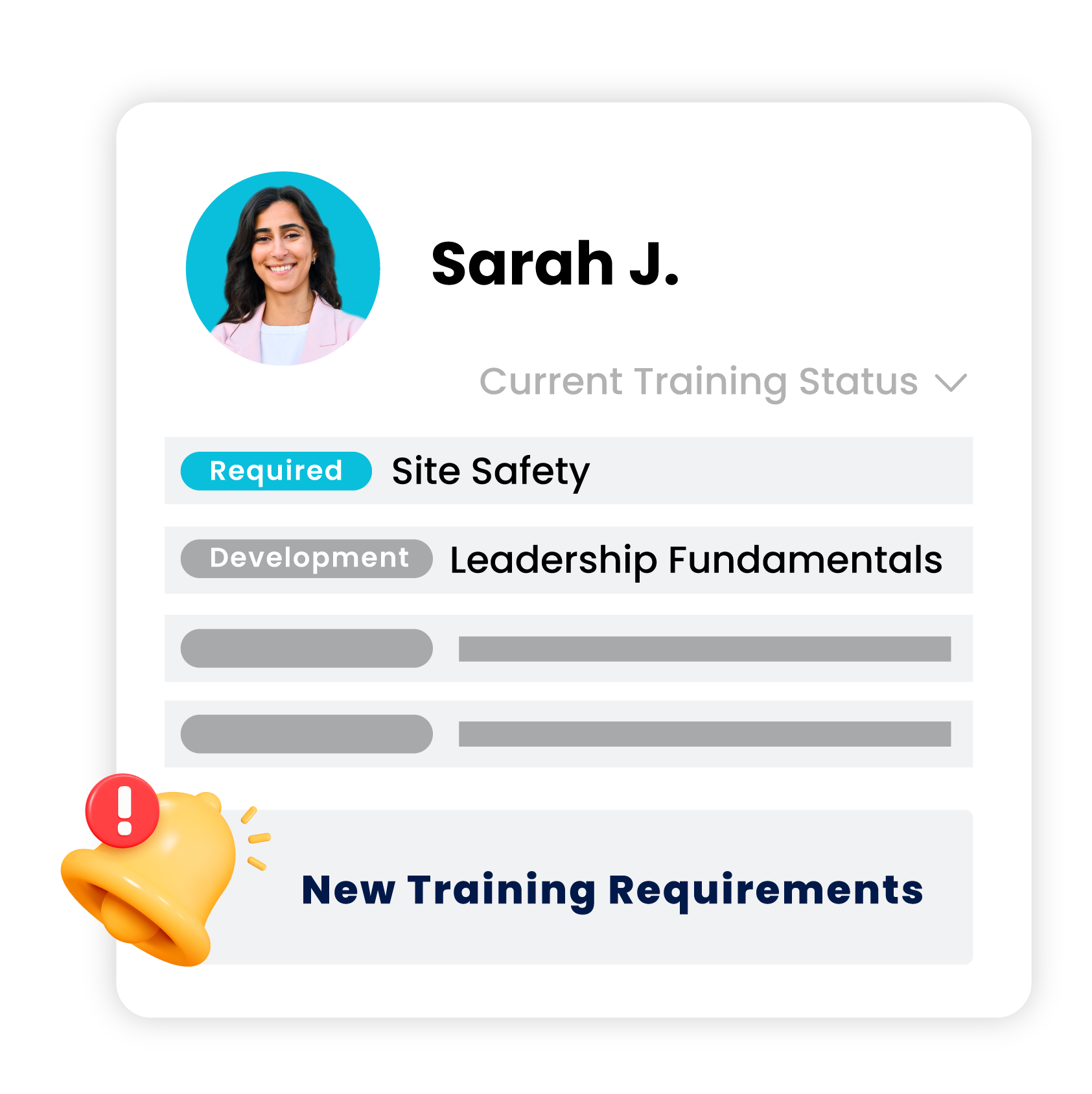
Compliance training vs. skills training. Compliance training protects the organization by satisfying a requirement; skills-based training grows the person by building capability. The strongest programs treat them as two sides of the same platform, so required courses and development live in one place.
How Mitratech Learn Helps
Mitratech Learn gives HR one system for both sides of training: the courses you’re required to run, and the courses that grow your people.
-
 Assign automatically, by rule.
Courses map to the laws that actually apply — role, state, and headcount decide who gets what, so no one is left off a required course and no one gets one they don’t need. -
Prove it, on demand.
Every completion is logged with a timestamp and record, so when an auditor, regulator, or plaintiff’s attorney asks for proof, you can produce it in minutes. -
Track completion in real time.
A single dashboard shows who’s done, who’s overdue, and where the gaps are, instead of chasing spreadsheets across departments or locations. -
Cover both mandates in one platform.
Required compliance courses and optional skills development live side by side, so training doesn’t need two separate systems to manage. -
Stay current automatically.
When a state adds or updates a harassment-prevention mandate, or OSHA guidance changes, assignments update without HR having to track the legal change itself.




Is Your Training Program Keeping Up?
Having a training program doesn’t mean every requirement is actually being met. The real question is whether you can prove it, for every employee, in every state you operate in. You likely have a gap if:
You can’t say, right now, which employees are overdue on a required course.
Your harassment-prevention training doesn’t reflect the specific rules of every state you operate in.
You’re tracking completions manually, in spreadsheets, across multiple systems.
Your safety training isn’t tied to documented, OSHA-ready records.
You have no automatic process for reassigning training when a law changes or an employee changes role or location.
You couldn’t quickly produce a completion record if an auditor or regulator asked for one tomorrow.
*There are some training gaps you don’t want to discover after the fact: a missed state-mandated harassment course, an undocumented safety training, an employee who was never assigned a required module. These are exactly where automated tracking prevents an expensive mistake.
Mitratech Training and Safety, By the Numbers
U.S. jurisdictions mandate harassment-prevention training, and the list keeps growing
states where OSHA's duty to protect workers from recognized hazards applies to most employers
courses completed on Mitratech's platform by employees
Want expert backup for the judgement calls training can’t answer?

For mid-sized and larger employers, the value isn’t replacing your HR team; it’s extending it. On-demand access gives an HR manager, specialist, or director a full bench of specialists to consult across every topic and jurisdiction, so a stretched team can make fast, consistent, defensible decisions without sending each one to outside counsel.
Prêt à se concentrer sur ce qui compte le plus ?
Réservez une démonstration aujourd'hui et retournez faire ce que vous faites le mieux !

"Avec Mineral, nous avons l'impression d'avoir un expert en ressources humaines en interne pour répondre à nos questions et maintenir nos politiques et manuels à jour et en conformité. Ils sont toujours prompts à répondre à nos questions, et l'outil de gestion du manuel de l'employé est le meilleur de sa catégorie".

"Nous utilisons les modules de formation de Mineral pour la formation annuelle sur le harcèlement et d'autres formations RH. J'apprécie la possibilité de consulter l'historique des formations, la facilité d'utilisation et la possibilité d'offrir des cours de formation supplémentaires aux employés, comme le développement personnel.

"Nous n'avions pas de solution RH avant Mineral. Avec Mineral, j'ai pu étendre le manuel de l'employé pour y inclure des directives spécifiques à l'État. De plus, nous utilisons également Mineral pour former les employés sur le harcèlement au travail, la diversité et d'autres sujets de formation.
FREQUENTLY ASKED QUESTIONS
What training are employers legally required to provide?
Which states require harassment-prevention training?
How often does compliance training need to be renewed?
What does OSHA require for workplace safety training?
How do we prove our required training was actually completed?
What's the difference between compliance training and skills training?
Compliance training satisfies a legal or contractual requirement and reduces organizational risk. Skills training isn’t mandated — it builds employee capability and engagement. They serve different purposes, but many organizations manage both through the same platform so nothing falls through the cracks.
This page is general information about workplace training and safety requirements, not legal advice. Requirements vary by state and by employer, and change over time — for guidance on your specific situation, consult qualified employment counsel.

©2026 Mitratech, Inc. Tous droits réservés.
©2026 Mitratech, Inc. Tous droits réservés.