L'analyse des opérations juridiques (associée à l'automatisation) offre aux équipes la visibilité nécessaire pour maîtriser les dépenses, identifier les inefficacités et prendre de meilleures décisions.
Pourtant, la plupart des services juridiques s'appuient encore sur des processus manuels, des systèmes cloisonnés et des rapports réactifs, laissant ainsi passer des opportunités de réduction des coûts. Voici comment les équipes juridiques modernes changent la donne.
Qu'est-ce que l'analyse des opérations juridiques ?
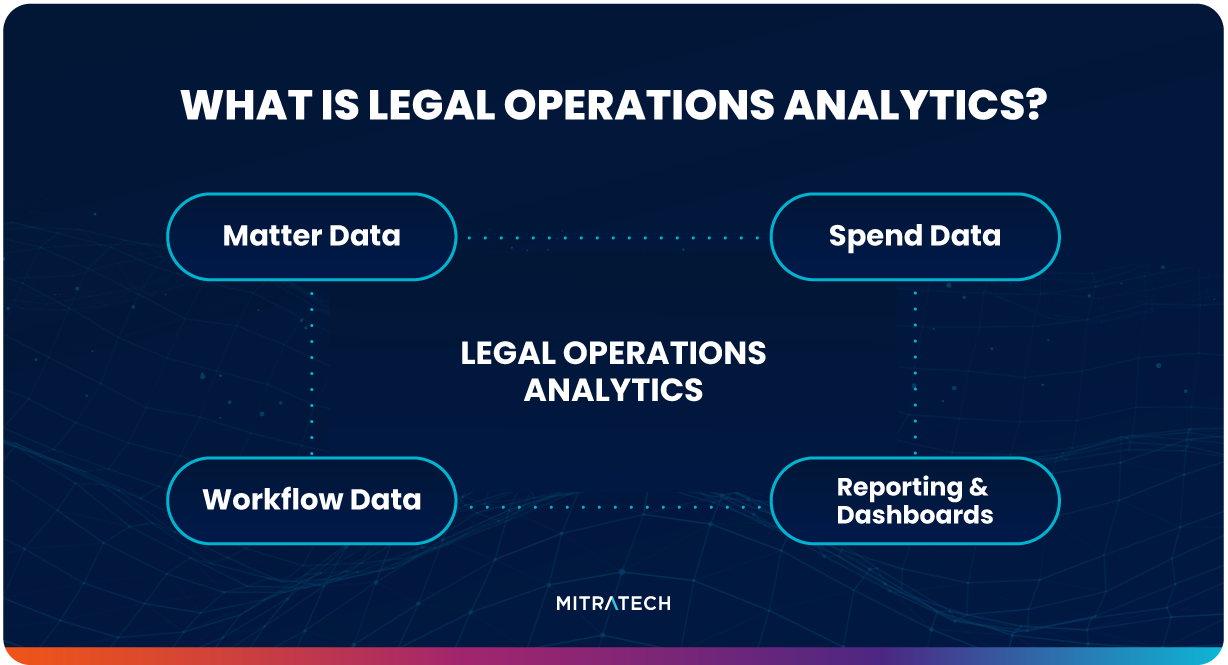
L'analyse des opérations juridiques consiste à utiliser des données, des rapports et des indicateurs de performance pour aider les équipes juridiques à maîtriser leurs dépenses, à réduire les tâches manuelles et à prendre de meilleures décisions concernant les dossiers, la facturation et les avocats externes. En résumé, elle aide les équipes juridiques à :
- Obtenez une meilleure visibilité sur les dossiers, les dépenses et les performances
- Identifier les inefficacités et réduire le travail manuel
- Prendre des décisions fondées sur des données concernant les avocats externes et les ressources
- Améliorer la conformité, le reporting et le contrôle opérationnel
Pourquoi l'analyse des opérations juridiques est-elle si importante aujourd'hui ?
Les équipes chargées des opérations juridiques sont responsables de la maîtrise des coûts, de la transparence et de l'amélioration des processus au sein de la fonction juridique.
Parallèlement, les services juridiques :
- Gérer des charges de travail croissantes sans augmenter les budgets
- Face à la hausse des coûts liés aux avocats externes et à la complexité de la facturation
- Sous pression pour fournir aux dirigeants des analyses fondées sur les données
- C'est pourquoi les équipes juridiques se tournent vers l'analyse de données : pour passer d'un système de reporting réactif à un processus décisionnel structuré et fondé sur les données.
Comment l'analyse des opérations juridiques permet de réduire les coûts
-
Améliore la visibilité sur les dépenses juridiques
L'analyse fournit des informations et permet de maîtriser les dépenses juridiques, aidant ainsi les équipes à optimiser leurs budgets et à identifier les possibilités de réduction des coûts.
En d'autres termes, les équipes juridiques peuvent :
- Suivre les performances des avocats externes
- Analyser les schémas et les tendances en matière de facturation
- Identifier les inefficacités dans la répartition des dépenses
-
Permet de prendre des décisions fondées sur les données
Grâce à la centralisation des données et des rapports, les équipes juridiques peuvent :
- Évaluer les performances de l'entreprise et son rapport coût-efficacité
- Comparer les résultats entre les différents dossiers
- Prendre des décisions d'approvisionnement plus éclairées
À cette fin, les solutions Mitratech permettent de prendre des décisions fondées sur les données grâce à des fonctionnalités de reporting et d'analyse intégrées aux processus opérationnels juridiques.
-
Réduit le travail manuel grâce à l'automatisation
L'automatisation des processus permet d'éliminer les tâches répétitives et d'améliorer l'efficacité grâce à :
- Standardisation des processus
- Réduire au minimum les interventions manuelles
- Éliminer les goulots d'étranglement
Plus précisément, la solution d'automatisation des flux de travail (TAP) de Mitratech est conçue pour automatiser les tâches routinières, réduire le travail manuel et améliorer la cohérence des processus.
-
Renforce les fonctions de reporting et de prévision
L'analyse juridique aide les équipes à :
- Générer des rapports et des tableaux de bord en temps réel
- Estimer les frais juridiques avec plus de précision
- Fournir à la direction des données solides et vérifiables
Des solutions telles que TeamConnect offrent des fonctionnalités centralisées de reporting et d'analyse qui favorisent la visibilité et le suivi des performances.
Quand l'analyse de données rencontre l'automatisation des processus
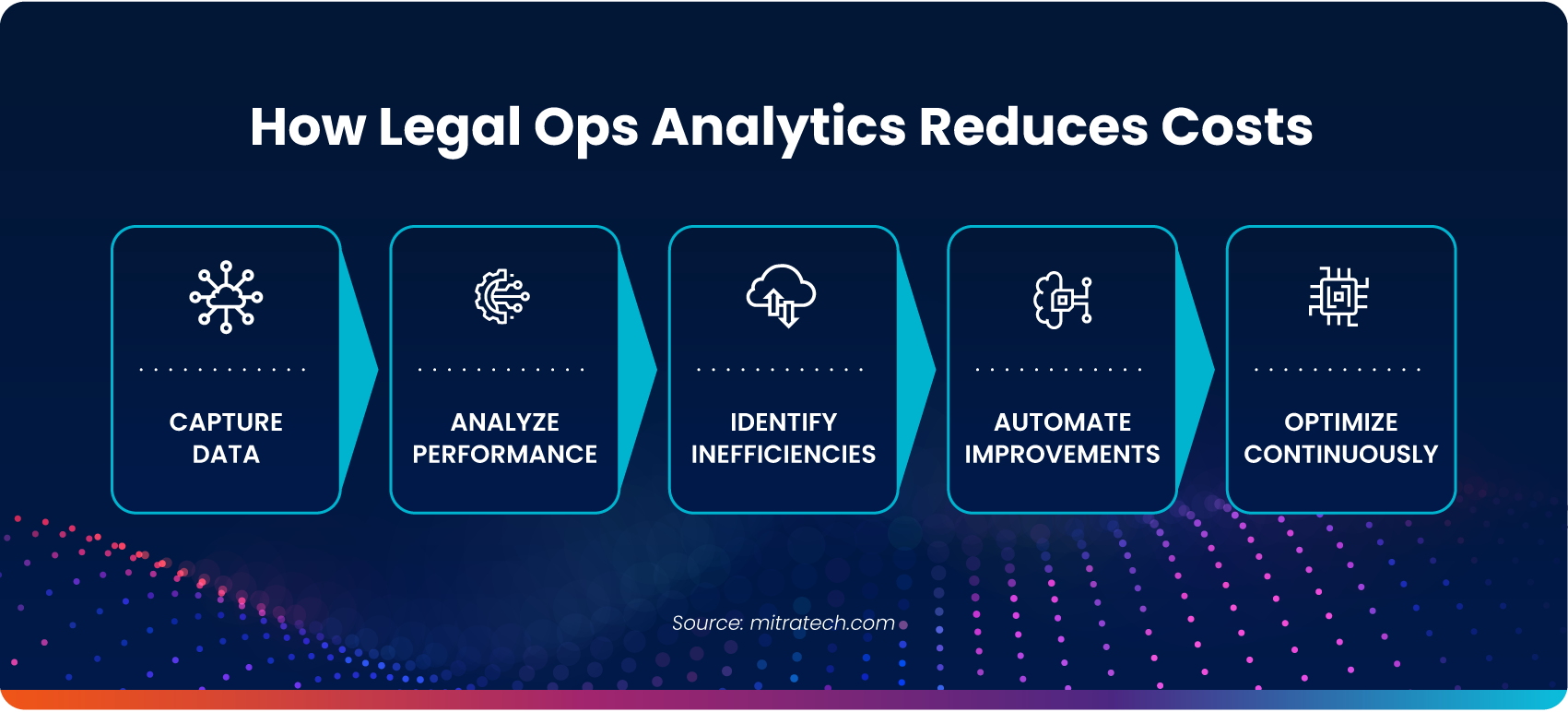
La combinaison de l'analyse et de l'automatisation crée un cycle d'amélioration continue :
- Collecter des données sur l'ensemble des dossiers, des flux de travail et des dépenses
- Analyser les performances à l'aide de tableaux de bord et de rapports
- Identifier les inefficacités dans les processus et l'affectation des ressources
- Automatiser les améliorations grâce à la mise à jour des flux de travail
- Répétez l'opération avec des données de meilleure qualité
Dans cette optique, cette approche permet aux équipes juridiques de :
- Standardiser les opérations
- Améliorer la conformité et la traçabilité
- Se développer sans augmenter les effectifs
Capacités clés
| Capacité | Description |
|---|---|
| Analyse des dépenses | Contrôle budgétaire, transparence et analyses sur les économies réalisées |
| Matter Analytics | Aperçu des performances et des résultats en matière de gestion |
| Analyse des flux de travail | Analyse des goulots d'étranglement et de l'efficacité des processus |
| Rapports et tableaux de bord | Visibilité en temps réel sur les données relatives aux opérations juridiques |
| Analyse de la facturation | Vérification des factures, conformité et maîtrise des coûts |
Comment mettre en œuvre l'analyse des opérations juridiques (étape par étape)
-
Centraliser les données juridiques
Utilisez un système de référence pour les dossiers, les dépenses et les flux de travail
-
Définir les indicateurs clés de performance (KPI)
Par exemple, les dépenses juridiques, la durée du cycle, les résultats des dossiers
-
Déployer des rapports et des tableaux de bord
Assurer une visibilité en temps réel sur l'ensemble des opérations juridiques
-
Automatiser les flux de travail
Réduire le travail manuel et standardiser les processus
-
Optimiser en permanence
Utiliser les informations issues de l'analyse de données pour optimiser les processus et les décisions
De la visibilité au contrôle
En conclusion, l'analyse des opérations juridiques n'est plus une option. Elle est au cœur même de la manière dont les équipes juridiques modernes :
- Maîtriser les dépenses
- Améliorer l'efficacité
- Générer un impact commercial mesurable
Ainsi, associée à l'automatisation des processus, l'analyse de données offre aux services juridiques la visibilité, le contrôle et la confiance nécessaires pour jouer un rôle stratégique au sein de l'entreprise.
Questions fréquemment posées
Quels sont les avantages de l'analyse des opérations juridiques ?
Avant tout, cela offre aux équipes juridiques une meilleure visibilité sur les dossiers et les dépenses. Cela permet également de réduire les tâches manuelles, d'améliorer la précision de la facturation et, au final, de favoriser la prise de décisions davantage fondées sur les données au sein de la fonction juridique.
Comment l'analyse juridique permet-elle de réduire les dépenses juridiques ?
En substance, cela consiste avant tout à identifier les inefficacités avant qu’elles ne s’aggravent. De plus, cela améliore la précision de la facturation et permet de prendre de meilleures décisions concernant le recours à des avocats externes, ce qui se traduit par des économies mesurables à long terme.
Quel est le rôle de l'automatisation dans l'analyse juridique ?
En résumé, l'automatisation permet de transformer les informations en actions concrètes. Plus précisément, elle uniformise les processus, réduit les tâches manuelles et favorise l'amélioration continue des performances dans l'ensemble des flux de travail juridiques.
Qui utilise l'analyse des opérations juridiques ?
De manière générale, cet outil est utilisé par les équipes chargées des opérations juridiques, les directeurs juridiques et les responsables juridiques. En d'autres termes, par toute personne chargée de veiller à l'efficacité, à la maîtrise des dépenses et à la performance au sein du service juridique.
Quels sont les systèmes qui prennent en charge ce type d'analyse ?
Les plateformes de gestion juridique d'entreprise (ELM) constituent la solution la plus courante. Ces outils offrent des fonctionnalités centralisées de gestion des données, de reporting et d'analyse, fournissant ainsi aux équipes juridiques une source unique et fiable d'informations.